Curriculum
A well-rounded education, subject by subject.
Open any area below to see how it’s taught at Del Mar Pines.
Explore the subjects
A well-rounded education, subject by subject.
Open any area to see how it’s taught at Del Mar Pines.
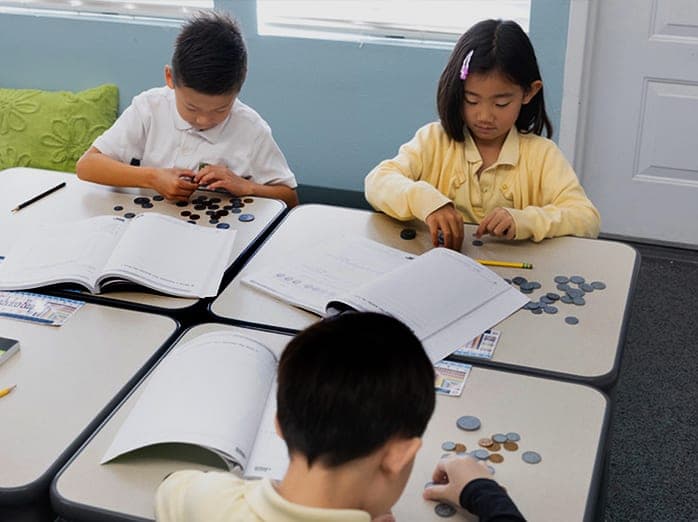
Our math program is built around mastery, not memorization. Students don’t just learn a concept: they apply it to real situations until it sticks.DMP students receive up to seven hours of weekly math instruction in small groups of 10 to 14, grouped by ability rather than grade level. A student who has mastered current grade-level standards moves on to more advanced material.Kindergartners begin with hands-on manipulatives, discovering numbers and patterns and building toward place value, basic graphing, and simple equations. As students move through the grades, they build computational fluency and apply math to problem-solving, geometry, statistics, probability, and algebraic thinking all appear well before middle school.
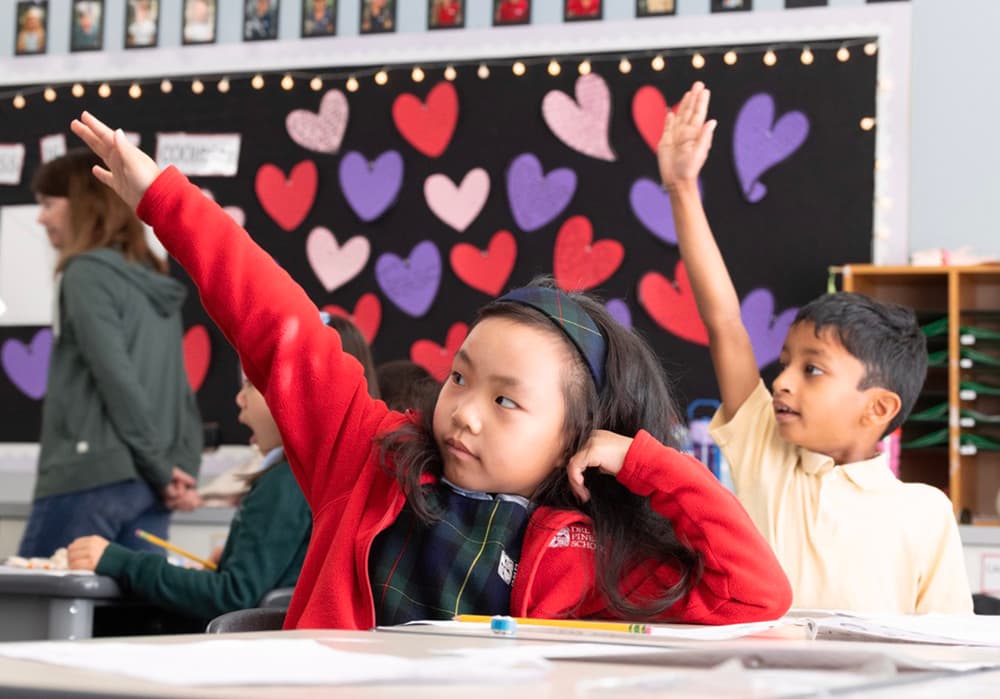
Reading and writing are at the center of everything we do. Students in the lower grades receive up to eight hours of language arts instruction each week, in small, developmentally appropriate groups.It starts with the fundamentals: phonemic awareness, sight words, sound-symbol relationships, and the visual and motor skills that make reading and writing possible. From there, students build toward comprehension of full novels, analytical writing, creative composition, and public speaking.We put real weight on literature appreciation, finding your own voice as a writer, and the research skills (mind-mapping, outlining, evaluating sources) that carry students through middle school and beyond.
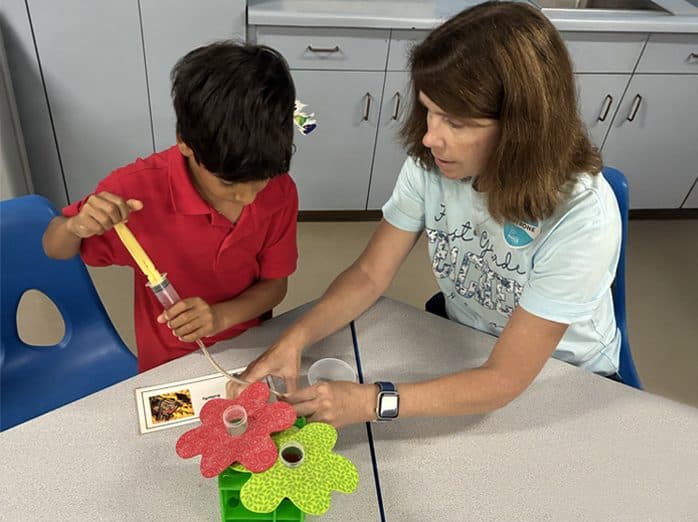
We believe children are natural scientists. An engaging and robust science education in elementary school is critical in connecting to children’s curiosity and wonder while getting them excited to learn more. Students in grades K–6 receive weekly science instruction in the classroom plus an additional one hour of hands-on science in the science lab each week.We use multiple science programs and are aligning our K–6 science curriculum to the Next Generation Science Standards (NGSS), which will help our students develop a deeper understanding of science beyond memorizing facts, and experience similar scientific and engineering practices as those used by professionals in the field.Our science program includes interactive science instruction that promotes analysis and interpretation of data, critical thinking, problem-solving, and connections across science disciplines. Each year, students are able to demonstrate a greater capacity for connecting knowledge across, and between, the physical sciences, life sciences, earth and space sciences, and engineering design.
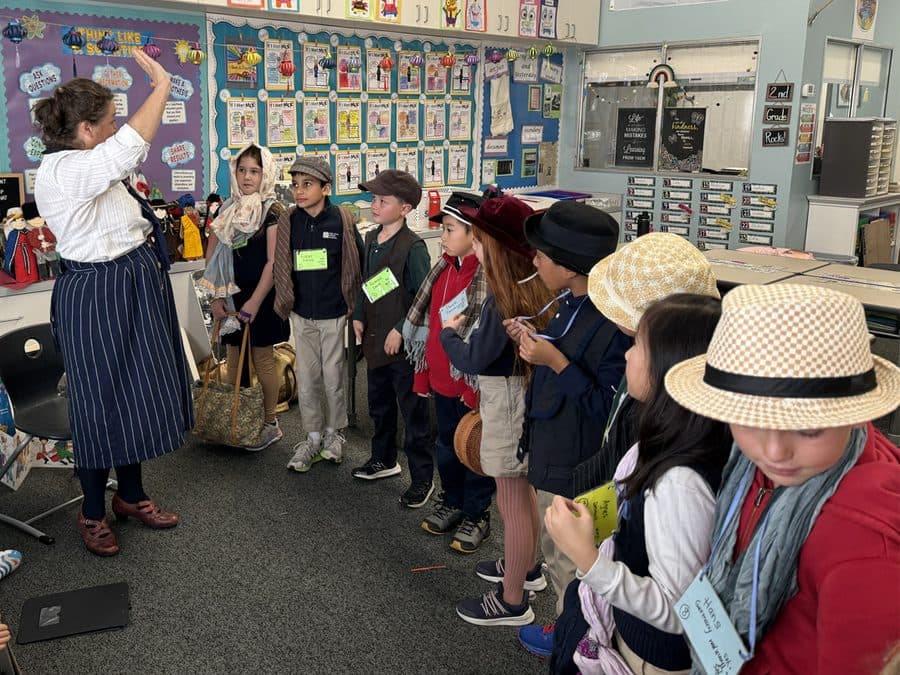
Social studies at DMP starts close to home and grows outward. In kindergarten and first grade, students explore relationships, rights, and responsibilities: fairness, self-control, leadership, and what it means to respect other people’s perspectives.In the years that follow, students study the geography and economy of their own neighborhoods, then expand to state, national, and global perspectives: California’s landscape, the history and impact of Native American communities, and the waves of immigration that shaped the country.By the upper grades, students study U.S. history and the relationship between state and federal government, alongside the ancient civilizations of Greece, Rome, India, China, and Egypt.
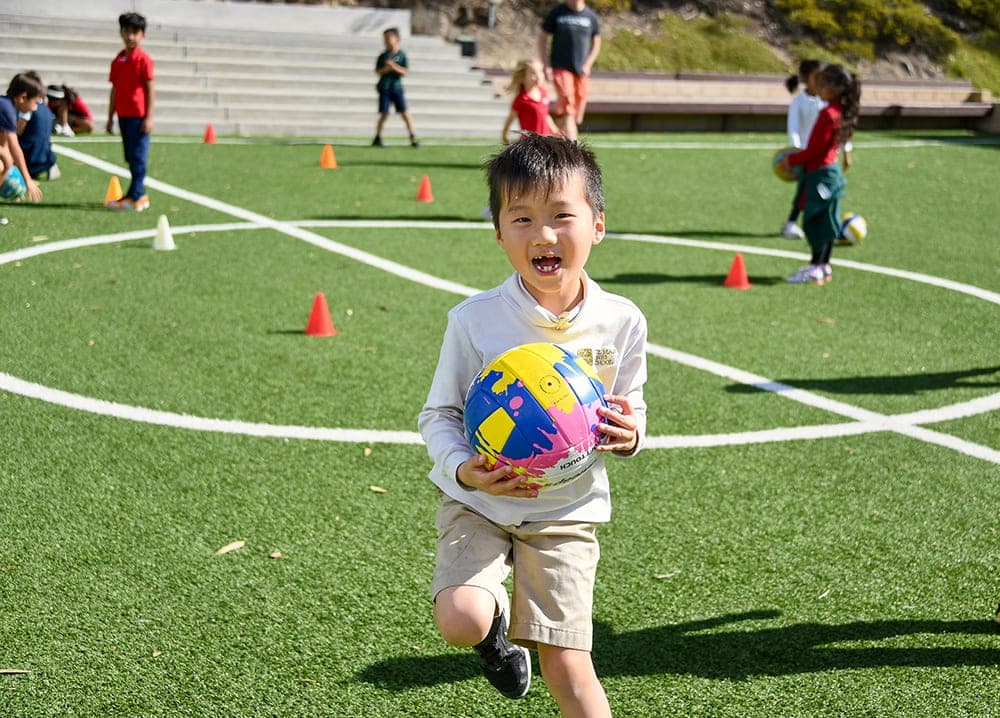
Weekly PE instruction builds movement, teamwork, and healthy habits as part of a well-rounded week, not an afterthought.
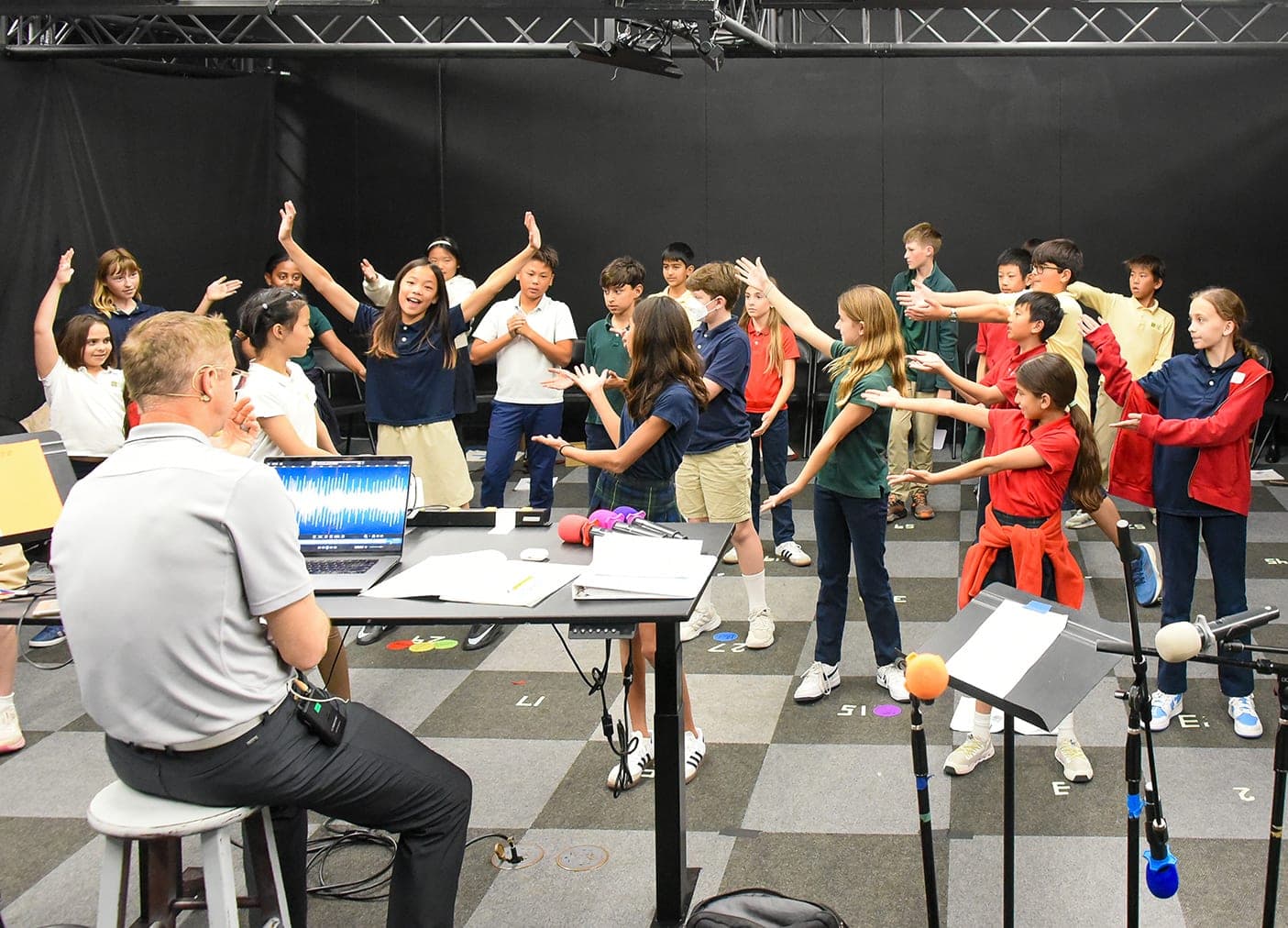
Every student at DMP gets weekly musical instrument or performing arts instruction. Each student participates in a class musical that is integrated into the curriculum. Our entire school works together to create our Spring Sing production each May.
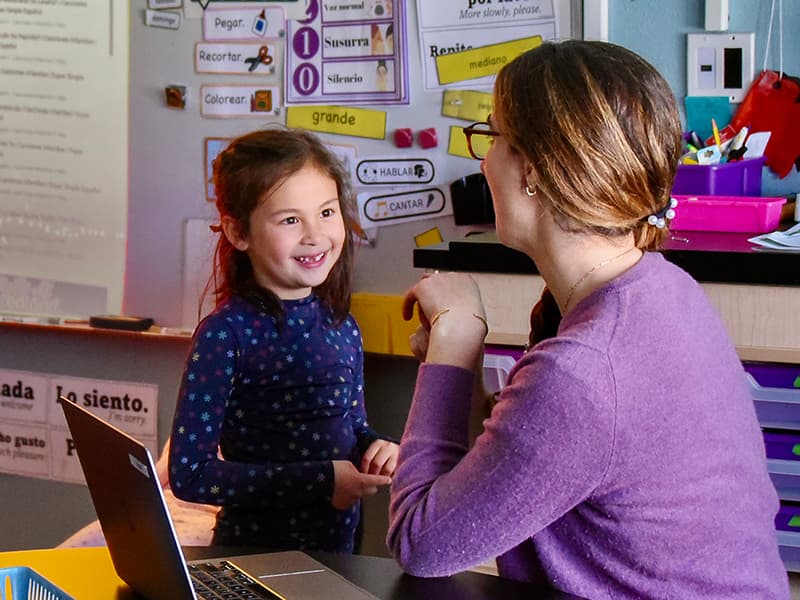
Spanish is part of the weekly rhythm at DMP from an early age, building language skills alongside cultural awareness as part of a complete education, not a bonus subject.
Weekly visual arts instruction gives every student room to create, experiment, and develop their own voice, alongside academics, not separate from them.Del Mar Pines students have placed nationally in the Wyland National Art Challenge, including a first-place win.
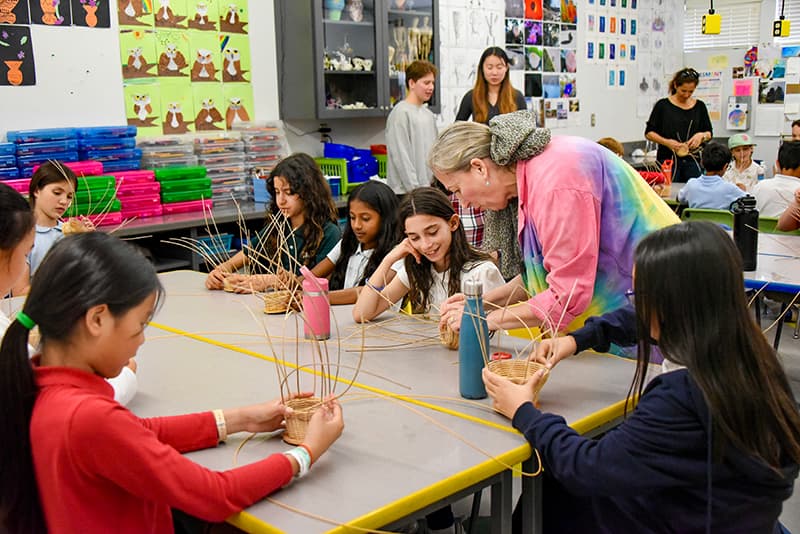
In addition to weekly classroom science, every student spends an extra hour each week in our dedicated science lab, getting hands-on with experiments, materials, and the kind of real inquiry that builds scientific thinking early.
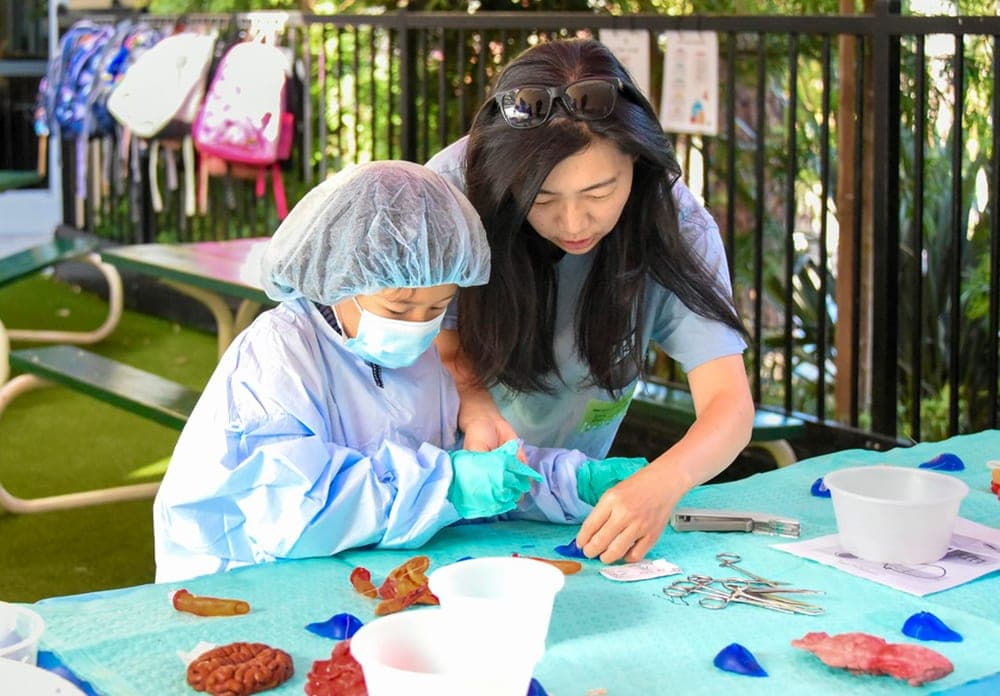
Technology instruction is integrated into the curriculum from an early age, building digital literacy and comfort with the tools students will use for the rest of their education, and their lives.
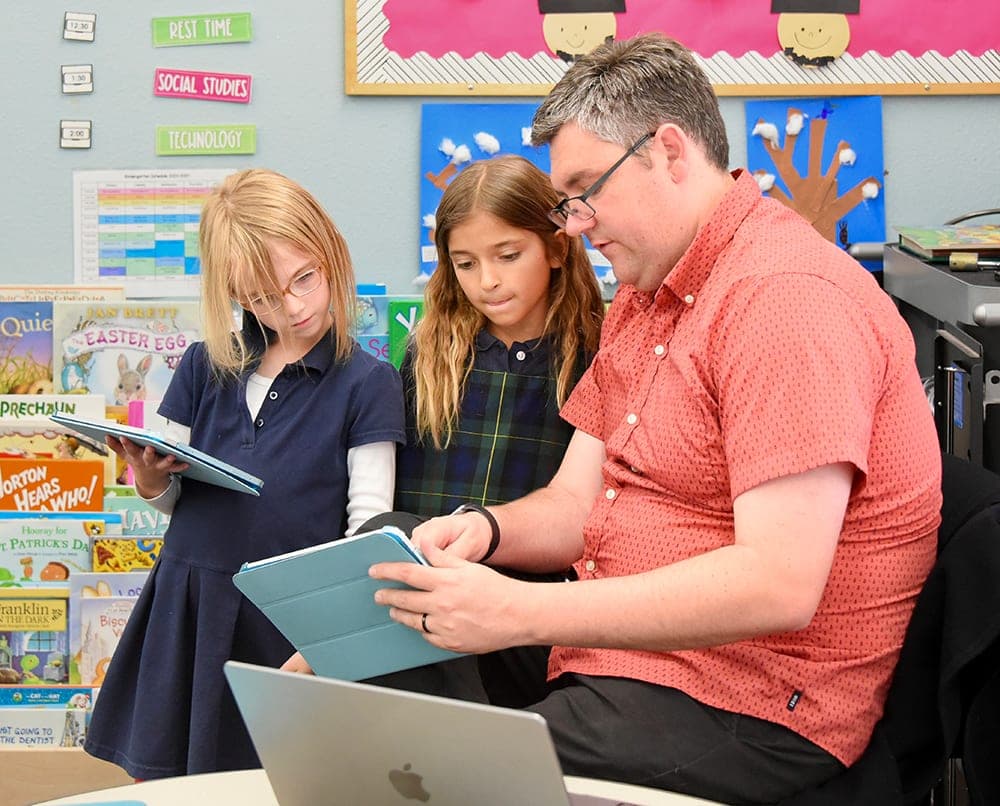
Weekly library instruction nurtures a lifelong love of reading, helping students discover new authors, genres, and ideas, and building the research skills that support every other subject.
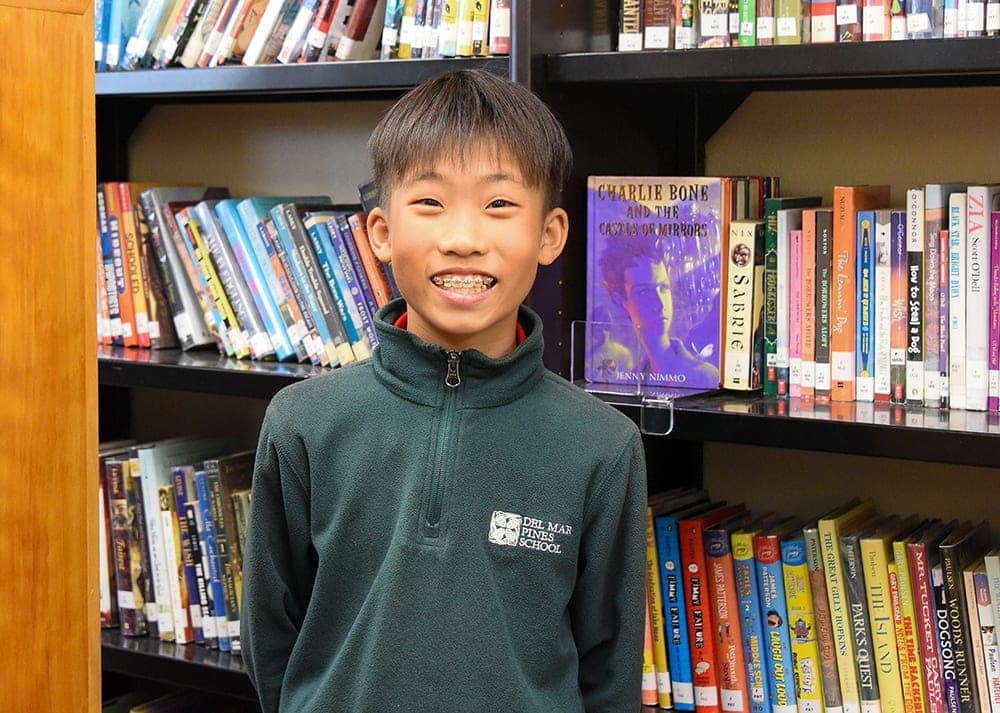
Wellness instruction for upper-grade students supports the social-emotional side of growing up, covering topics like healthy relationships, self-awareness, and the skills that help students navigate life beyond academics.
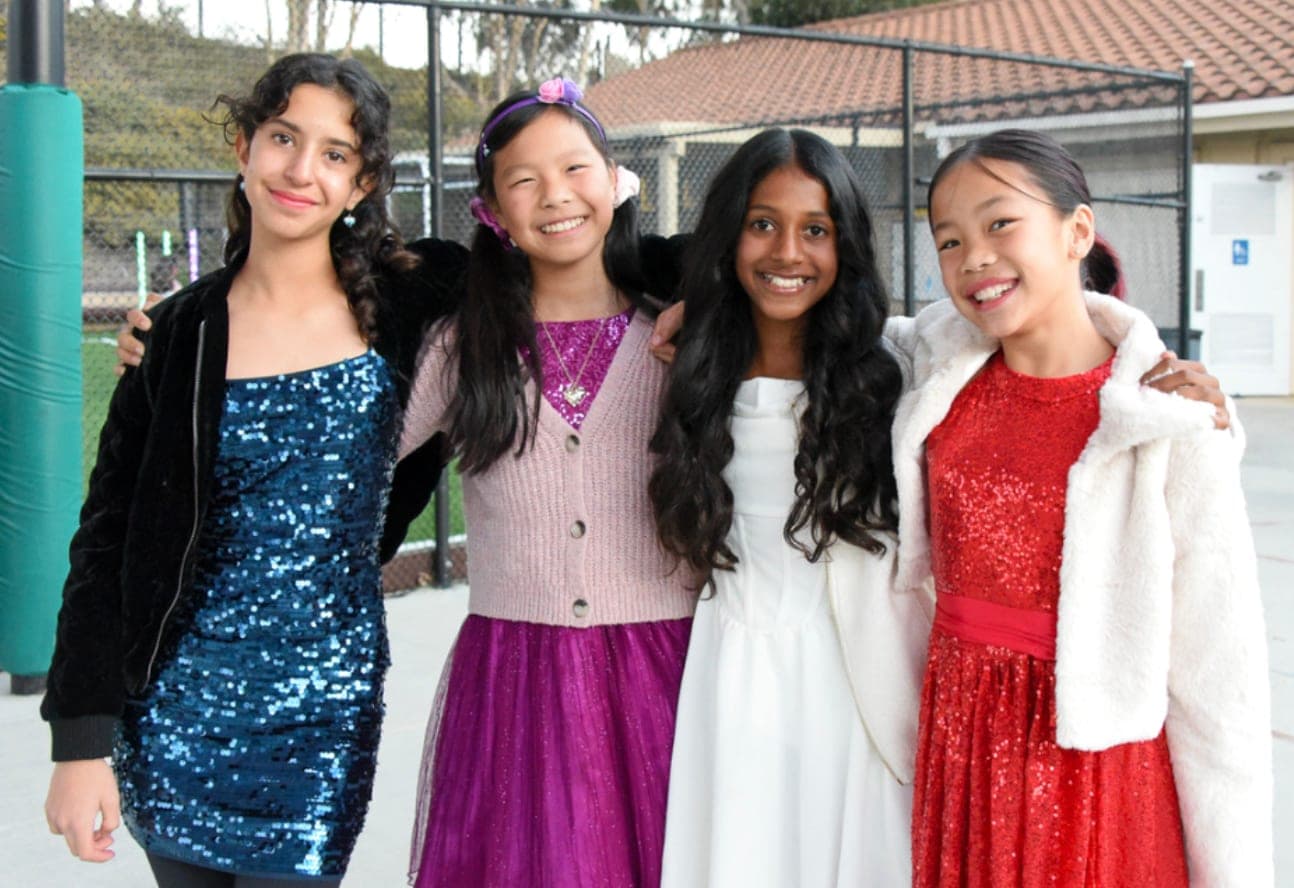
Beyond the academic day, our After Care program runs until 5:15 p.m. for families who need it, and Summer Discoveries Day Camp keeps learning and fun going right through the summer.
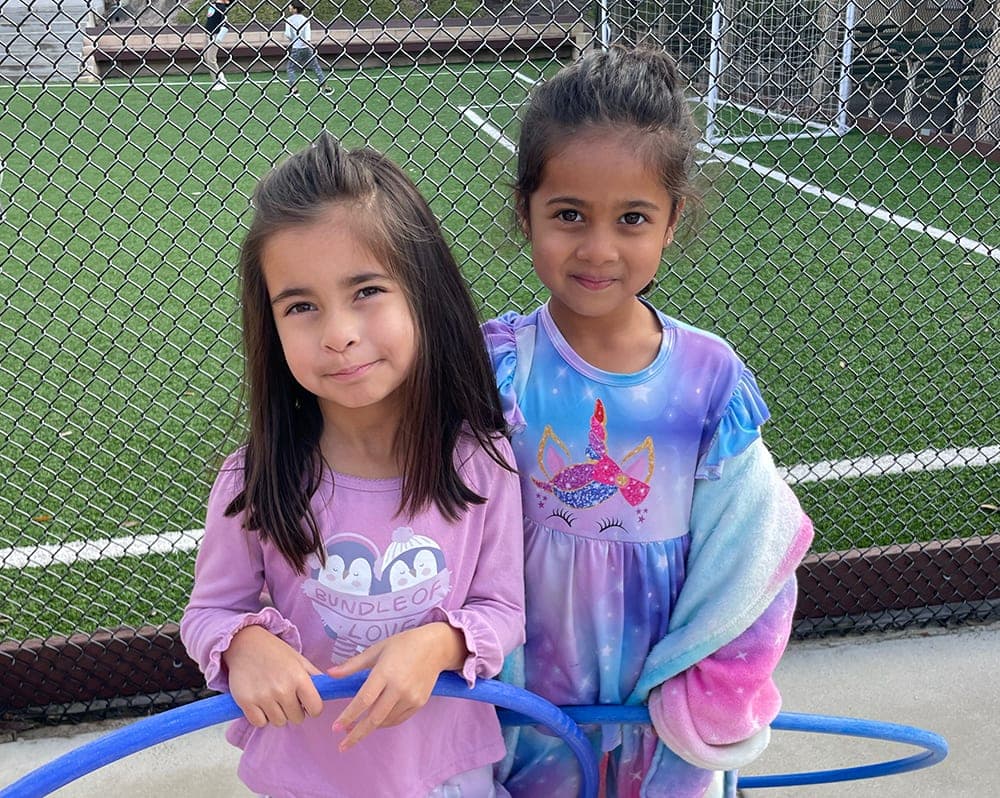
Kindergarten at DMP is built around two full-time teachers, small groups from day one, and a steady, gentle rhythm that helps each child find their footing, socially and academically, before first grade begins.Your child is learning their letters and numbers, yes, but they are also learning how to be a student: how to raise a hand, take turns, solve a small problem, and feel safe enough to try. That foundation carries through every grade that follows.Visit the Kindergarten page →
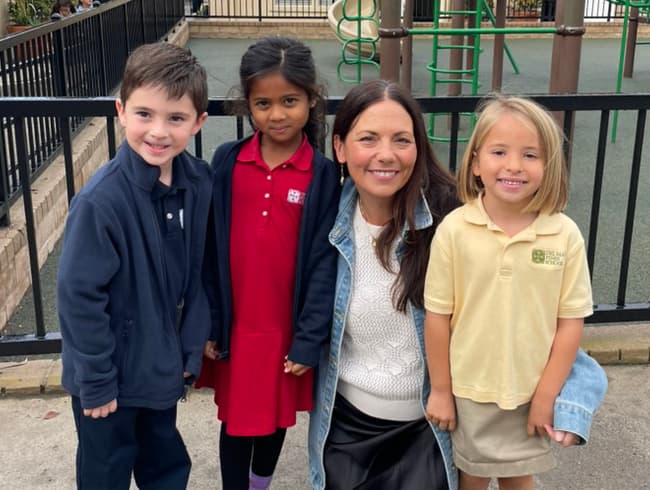
6th grade is where seven years of being known pays off: leadership, accelerated academics, and a confident launch into middle school.Visit the 6th Grade & Outcomes page →